Utah
Full roof replacement
A replacement is a tear-off, not a second layer. The point of opening the roof is to see the deck, replace what is soft, and build a system that matches the weather on that street — ice on a shaded bench eave, wind at the Point of the Mountain, or UV on a St. George hip.
Tear-off, underlayment, and the finished roof
Old shingles off, new plywood where the deck was open, synthetic underlayment, ice-and-water at the eave, and shingles going on. These photos are from AT Max crews.
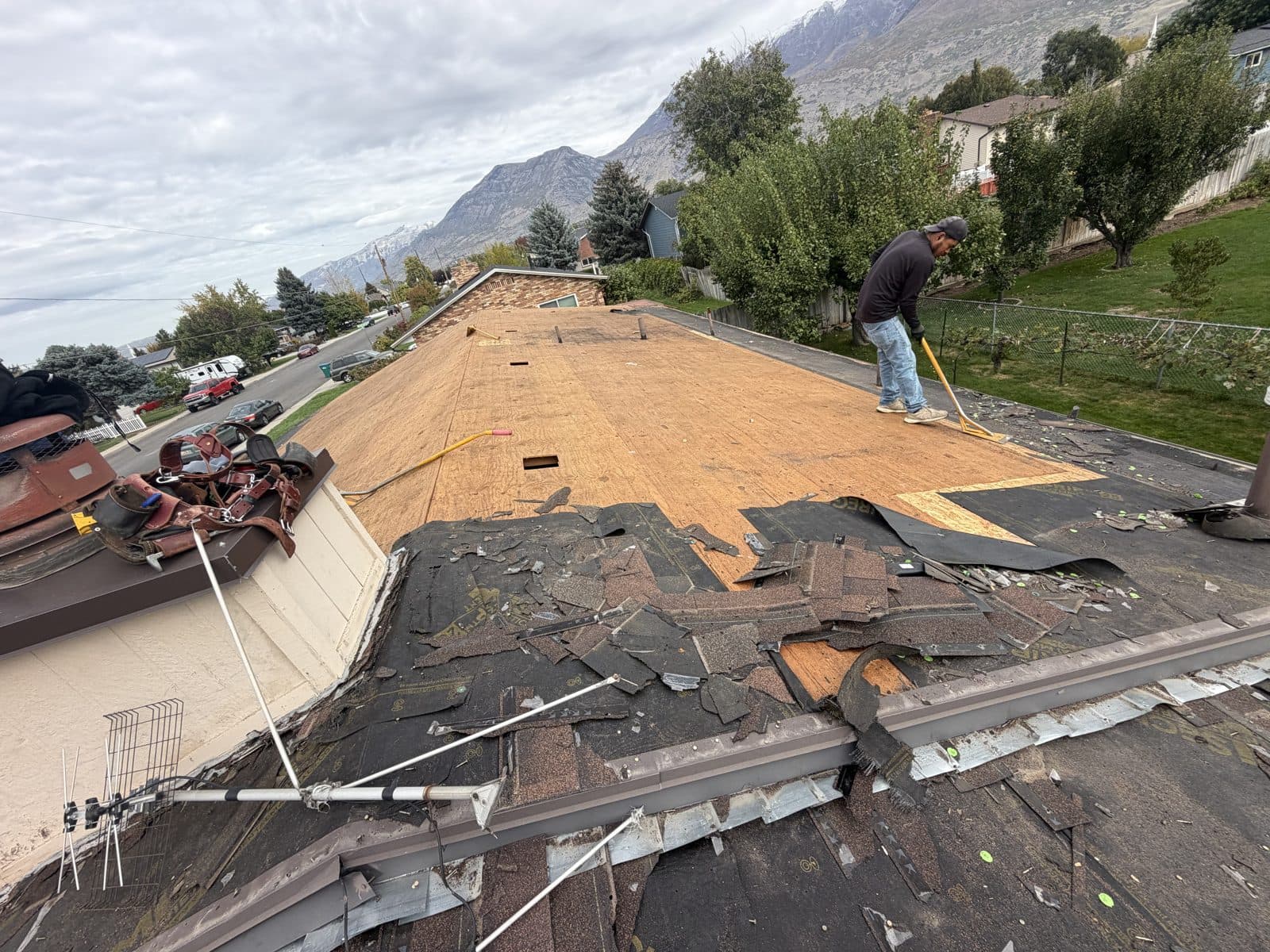
Tear-off down to the deck 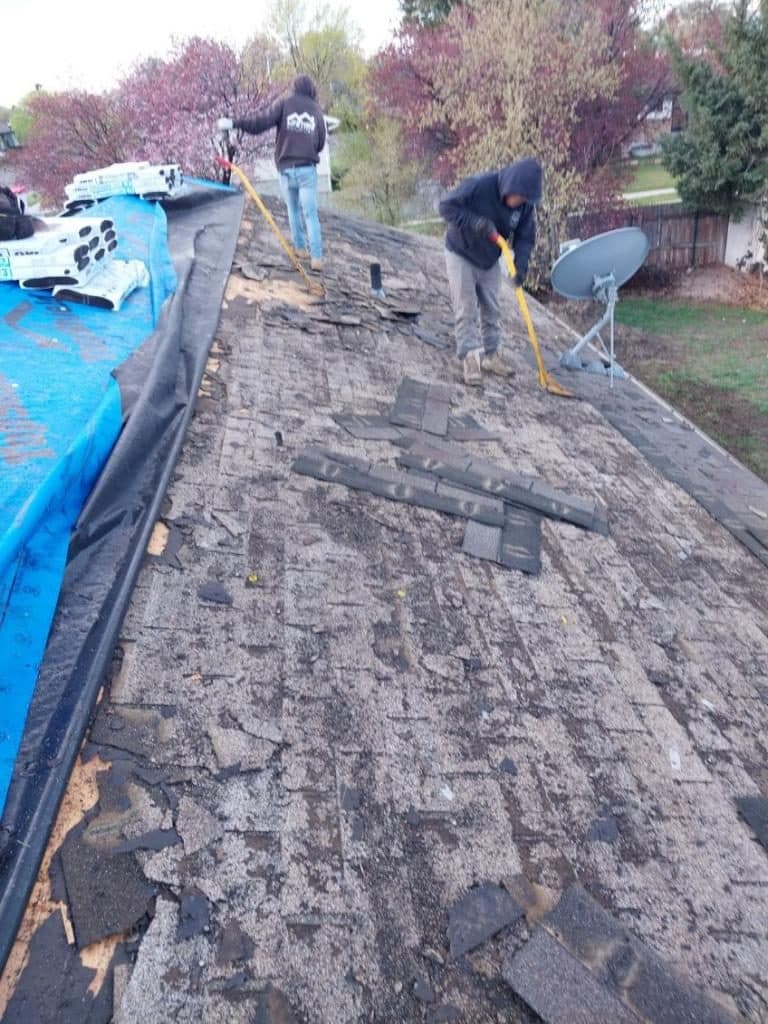
Tear-off, with underlayment on the lower roof 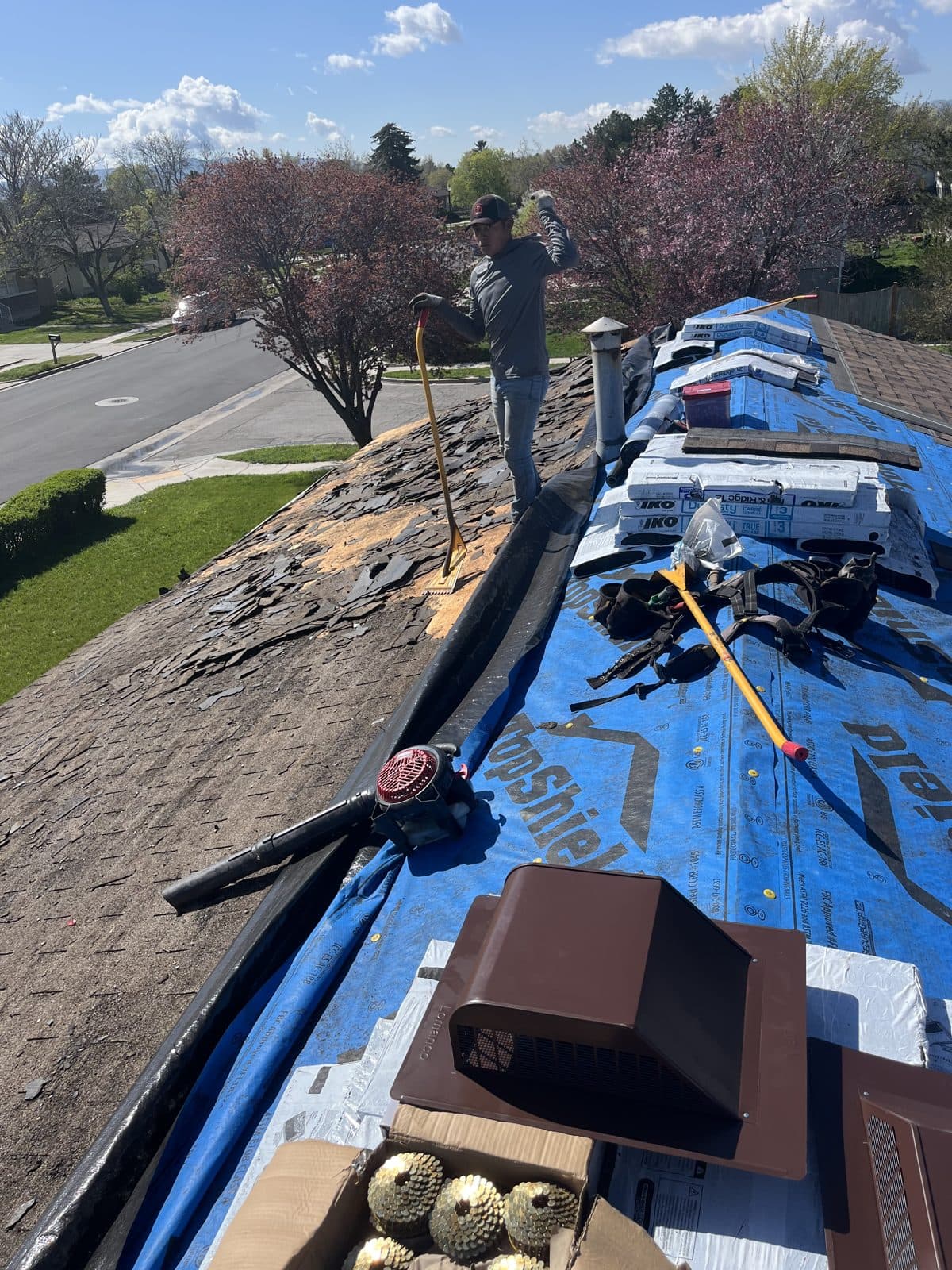
Tear-off beside underlayment and staged bundles 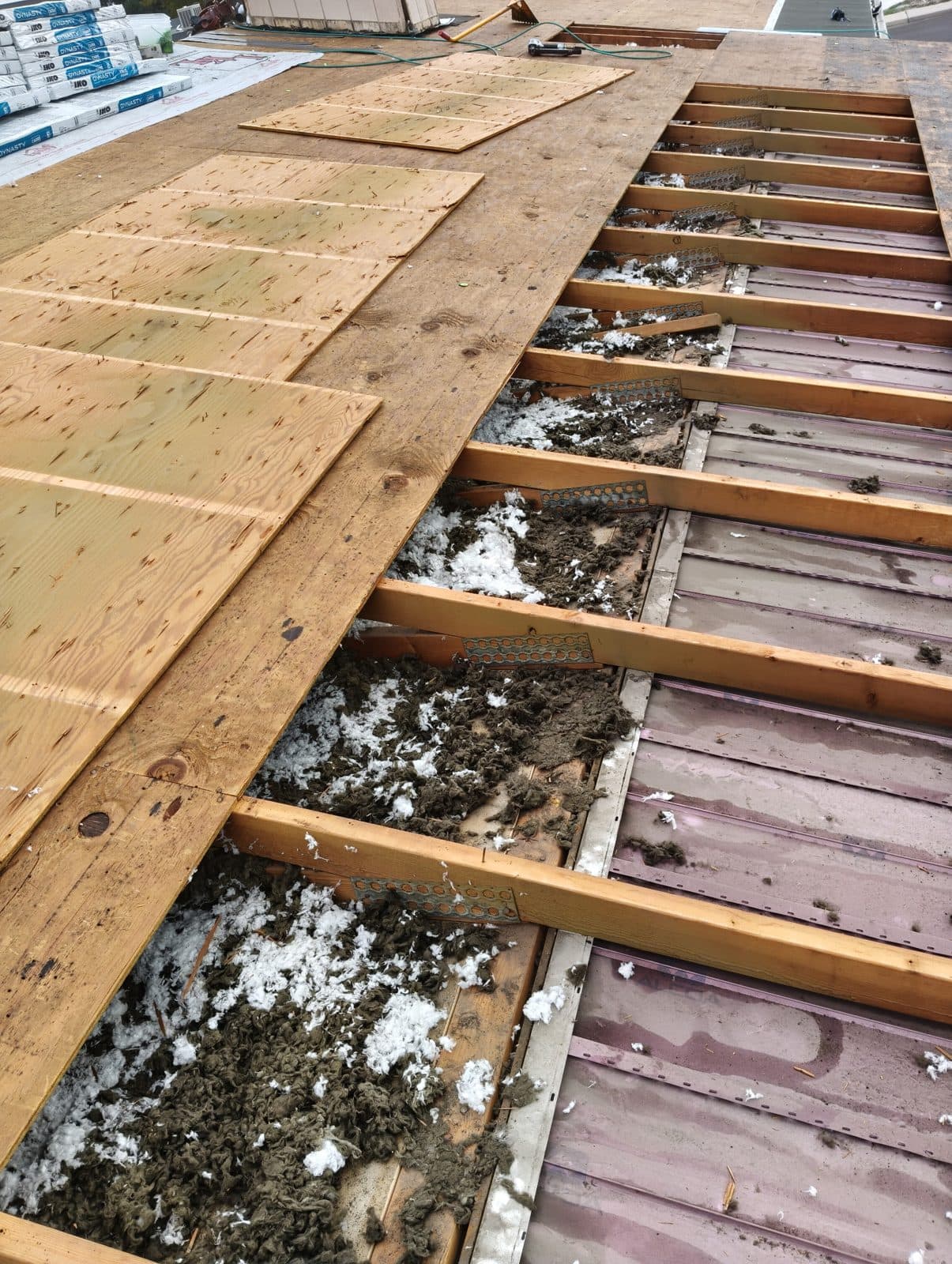
New plywood where the old deck was open 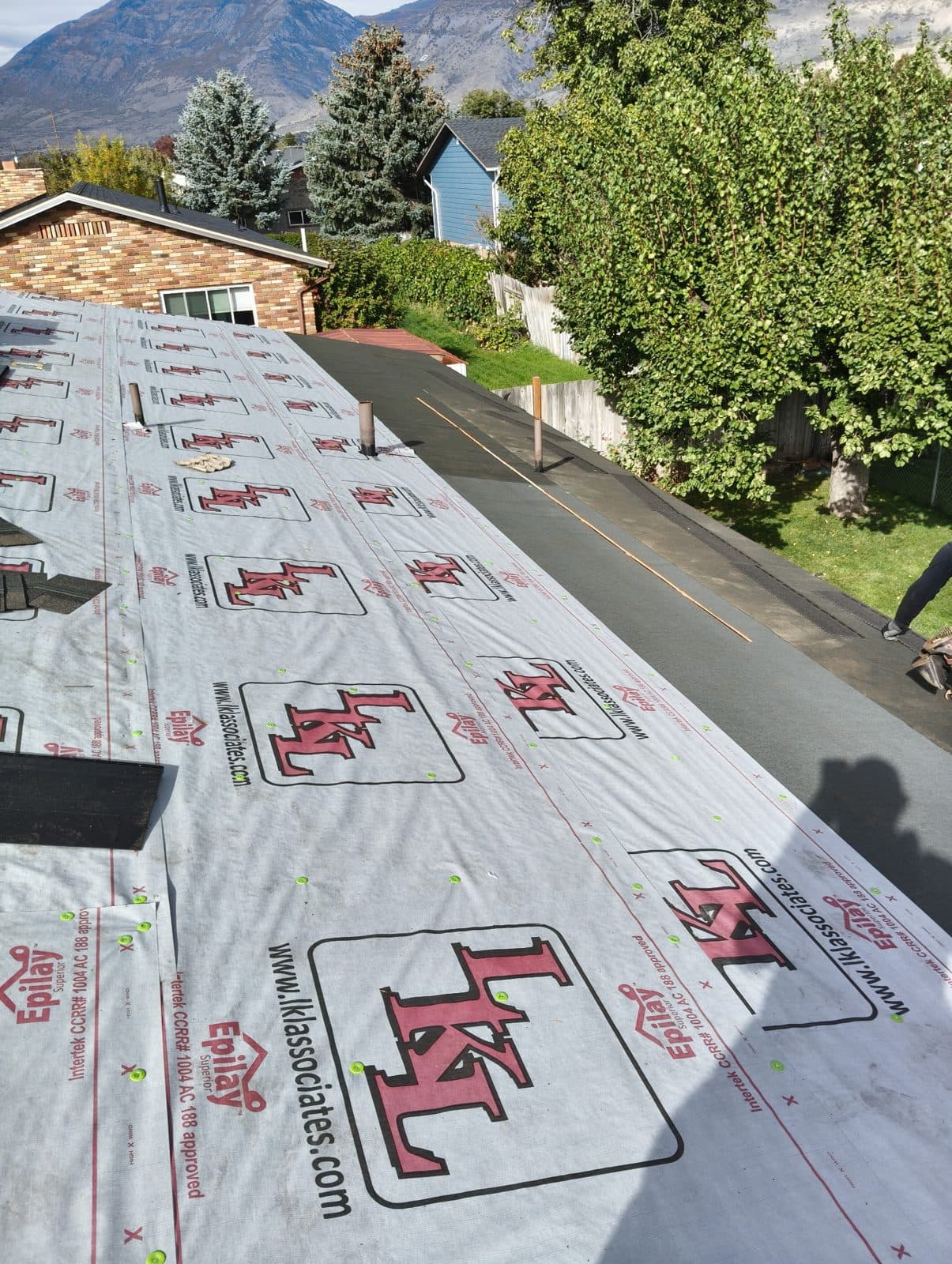
Synthetic underlayment across the field 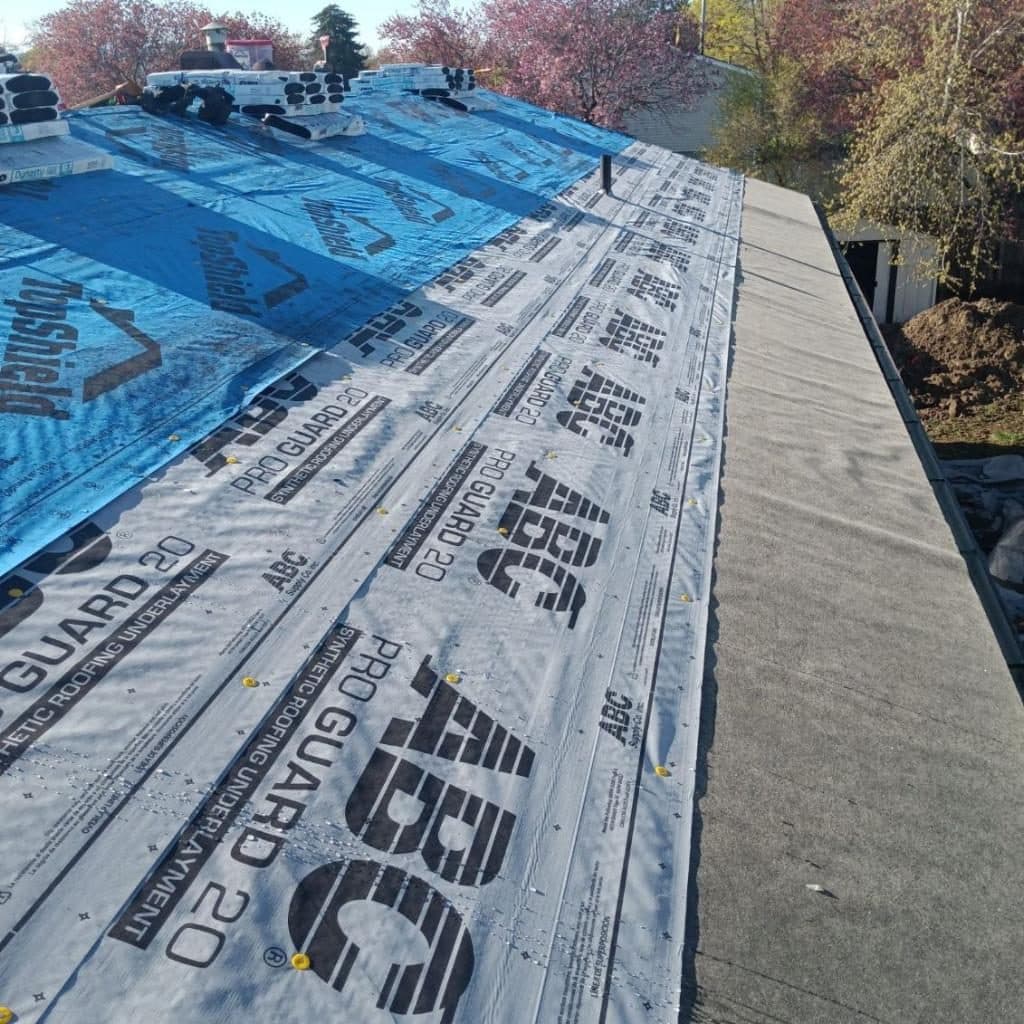
Ice-and-water shield at the eave 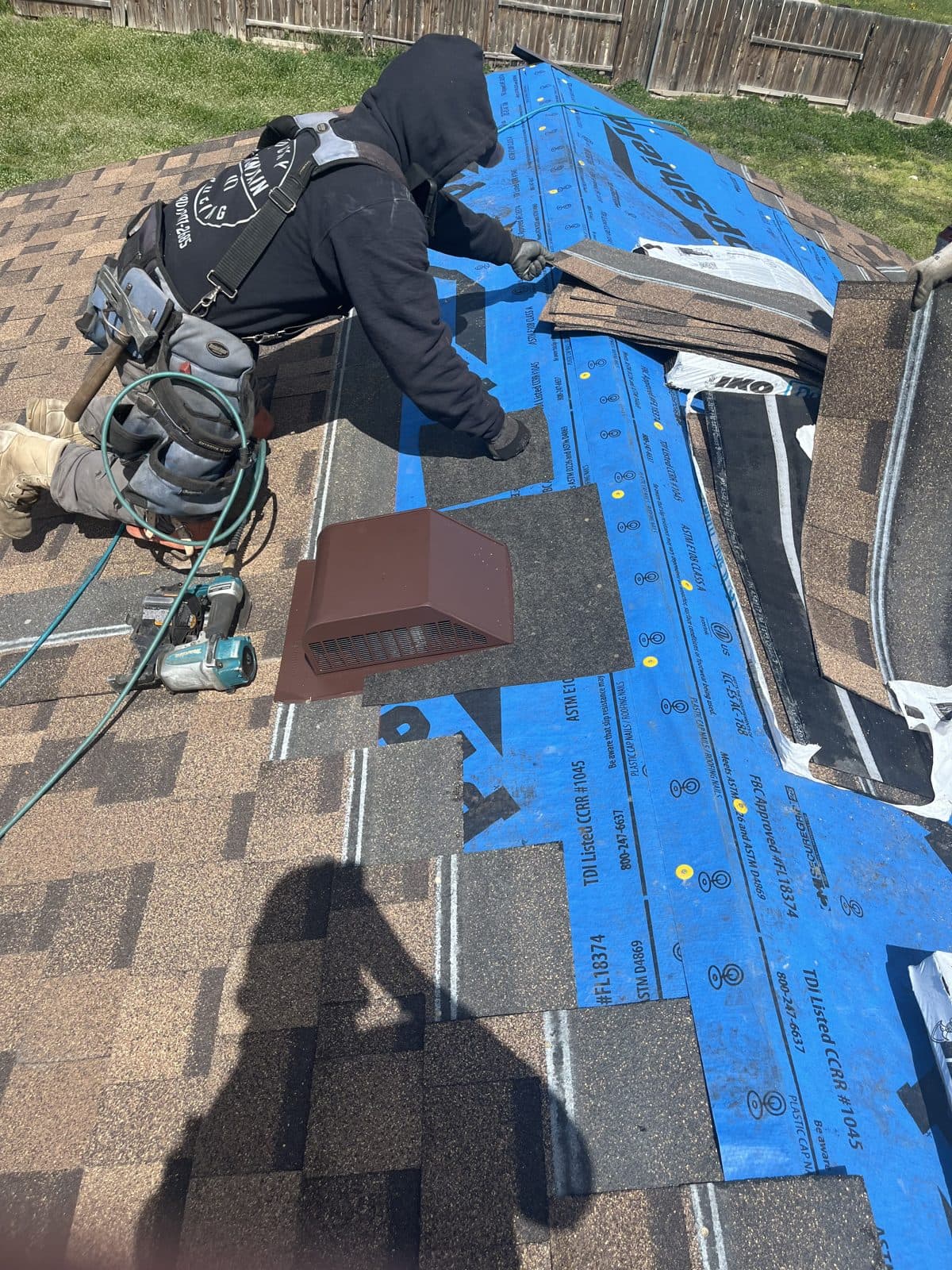
Setting shingles around a plumbing vent 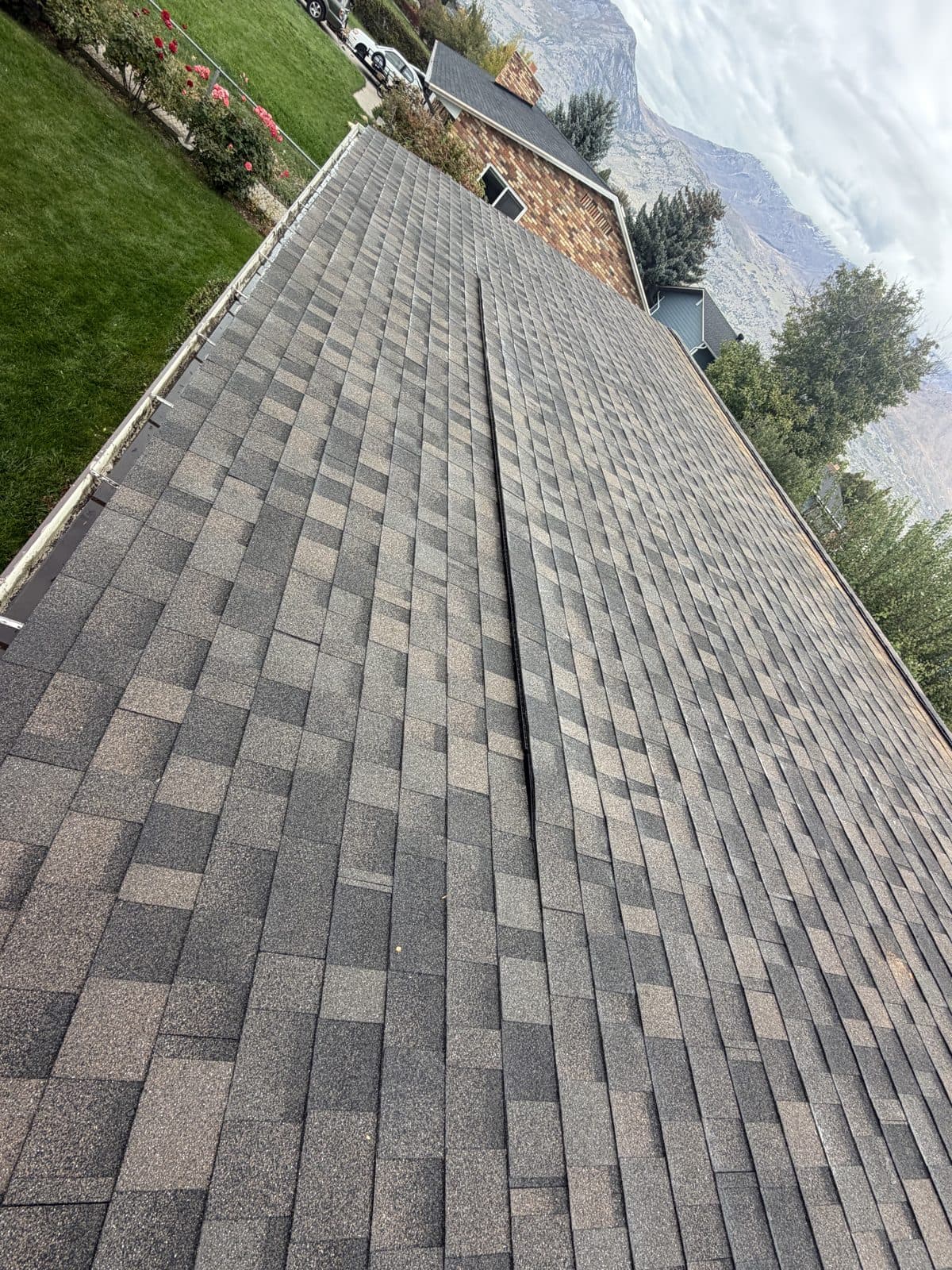
Full roof replacement on the Wasatch Front
When replacement is the real job
Granules in the gutter, curling tabs, cracked flashing, and a roof that has already been repaired in three valleys are the usual signs. Age alone is a weak reason. A twenty-year architectural shingle on a north slope in Logan can be tired while the same product on a simple hip in Santa Clara still has life — or the reverse, if the desert sun cooked it.
We will say so if the field of the roof is fine and the leak is a pipe boot, a skylight, or a chimney saddle. Replacing a roof to fix one flashing is how people pay for a new roof they did not need.
What the tear-off is for
Shingles, tile, or an old membrane come off down to the deck. We look for delaminated plywood, spaced planks that are fine for cedar and wrong for some shingle nailing patterns, and stains that mean a leak has been working longer than the ceiling spot suggests.
Decking is priced as an allowance unless the underside is already open and obvious. Anyone who quotes a firm plywood number before the tear-off is guessing. The estimate should say how that allowance is billed — by the sheet, with you seeing the bad wood.
- Tear-off and haul-away, including a second layer if one is there
- Deck repairs billed against a visible allowance
- Underlayment and ice-and-water where the climate and the eaves require them
- New flashings at walls, chimneys, and penetrations rather than reused metal
- Ventilation checked against the attic, not assumed from the ridge vent color
- A site left so nails are not the thing you find with a bare foot
Utah details that change the specification
Along the Wasatch Front, ice-and-water membrane belongs at the eaves and in valleys on most occupied houses, and farther up the slope where a north roof holds snow or a valley dumps onto a lower roof. Cache Valley and the higher benches need a wider conversation about ice dams. Washington County’s valley floor usually does not — until the house is up in New Harmony or Enterprise, where winter comes back.
Wind is local. South Weber and Uintah sit at the mouth of Weber Canyon. Bluffdale, Draper, and Lehi take the Point of the Mountain. Eagle Mountain is open to the west. Hurricane is named for a reason. Nailing pattern, starter course, and whether a hip needs a different edge detail all follow from that, not from a statewide package.
Permits are a city matter. Salt Lake City, a metro township, and a small town do not share a counter. We confirm who reviews the job before the tear-off is scheduled.
What a replacement estimate should name
The product family — architectural shingle, standing seam, tile, TPO — the underlayment, the flashing plan, and what is excluded. Solar panels, swamp coolers, and skylights are either in the scope or they are not. Gutters are a separate line unless the edge metal and the gutter are being done together, which is often the right time.
HOA neighborhoods such as Daybreak, Suncrest, Traverse Mountain, and many Eagle Mountain and Saratoga Springs plats need color approval before the order. We ask which HOA, if any, on the first call.
Cities where this comes up
These are examples, not a coverage limit. Every city page links the services that matter there.
Full roof replacement questions
Do you install a new roof over the old shingles?
No. A replacement includes a tear-off. An overlay hides the deck, adds weight, and leaves old flashings in place. If a house truly cannot take a tear-off, that is a structural conversation, not a shortcut we write into a normal estimate.
How long does a full replacement take?
Most single-family tear-offs on the Wasatch Front are measured in days, not weeks, once materials are on site and the weather holds. Tile, steep cedar, and houses with limited driveway access take longer. We give you the working days for that house after we have seen it, including a plan for rain.
Will you know the plywood cost before you start?
Only if the deck is already visible. Otherwise the estimate carries an allowance and we show you the soft sheets during the tear-off. Replacing a few sheets is ordinary on an older Utah roof. Replacing most of the deck is a different number, and you should hear it before we keep nailing.
Do I need ice and water shield in St. George?
On the valley floor, ice dams are rare and we do not pretend a Cache Valley eave detail belongs on a Bloomington hip. Valleys, penetrations, and low-slope tie-ins still get the right membrane. Up in Enterprise or New Harmony, winter is part of the spec again.
Who pulls the permit?
We identify the city or metro township and follow that building department’s replacement process. You should see the permit called out in the scope when that city requires one. Do not assume a neighboring city’s rules apply.
Related work
- Asphalt shingle roofingArchitectural shingles — the default Wasatch roof — detailed for UV at elevation, ice at the eaves, and local wind.
- Metal roofingStanding seam and other metal systems for wind, snow shedding, and owners who want a roof they can reread in twenty years.
- Roof repairLeaks, flashing, pipe boots, and storm-lifted shingles — repaired when a repair will last, and declined when it will not.
- Gutters and roof drainageSeamless gutters, downspouts, and the edge details that keep roof water from becoming a basement or a fascia problem.
Ask about roof replacement.
The inspection is free when it is tied to work we might do. The written scope comes after we have seen the roof.
Emergency roof calls answered 24/7. (385) 333-9637.