Utah
Roof inspections
A roof inspection should tell you what the roof is, what condition it is in, and what we would do next. It is not a general home inspection, a structural engineering report, or a bid dressed up as a finding. Buyers, sellers, and owners all use the same visit. The question they are asking is different, and the write-up should match the question.
On the roof, not from the curb
Hail hits marked in chalk, and finished roofs of the kind a report is judging. The written report is organized slope by slope.
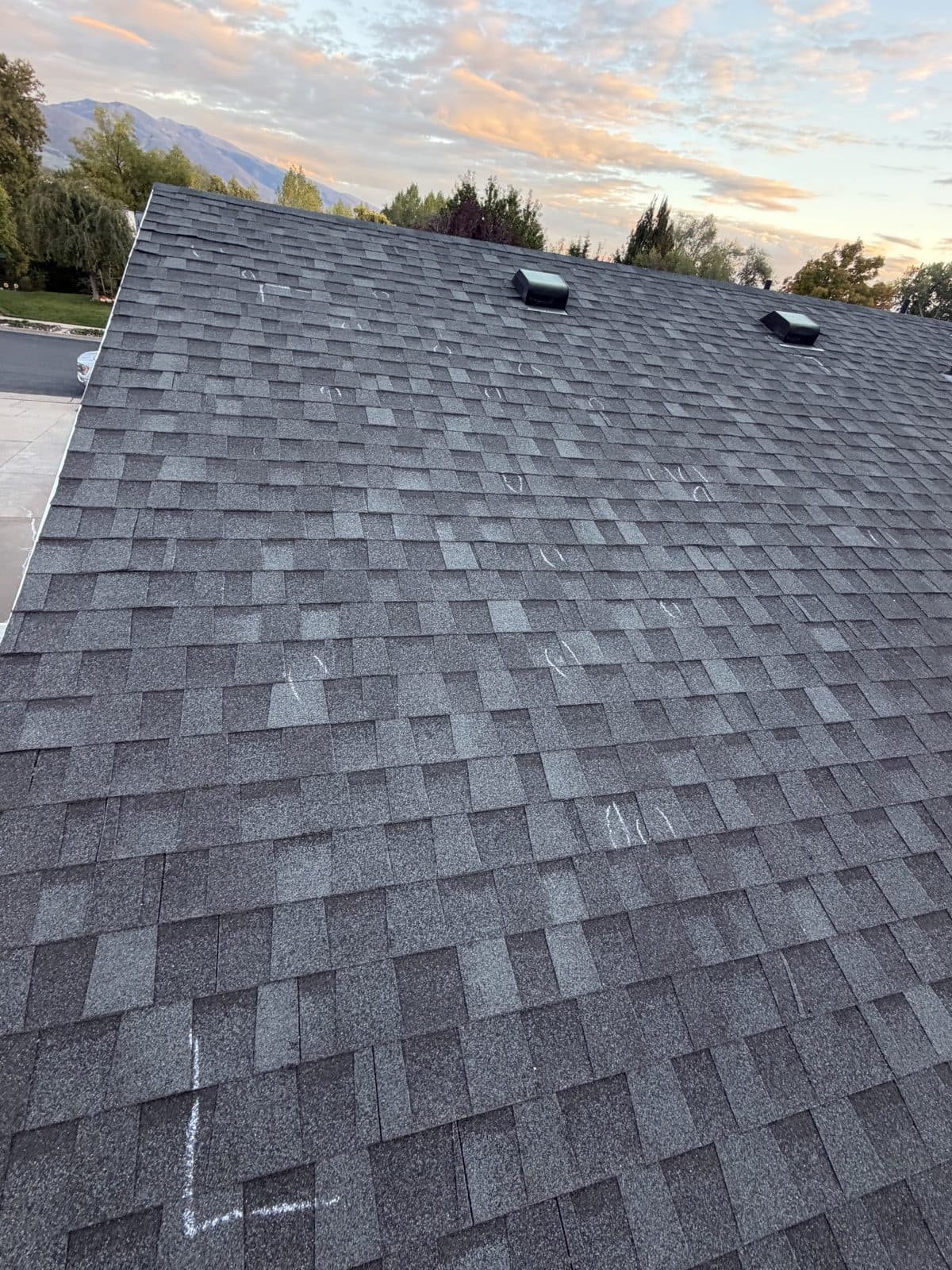
Hail hits circled during an inspection 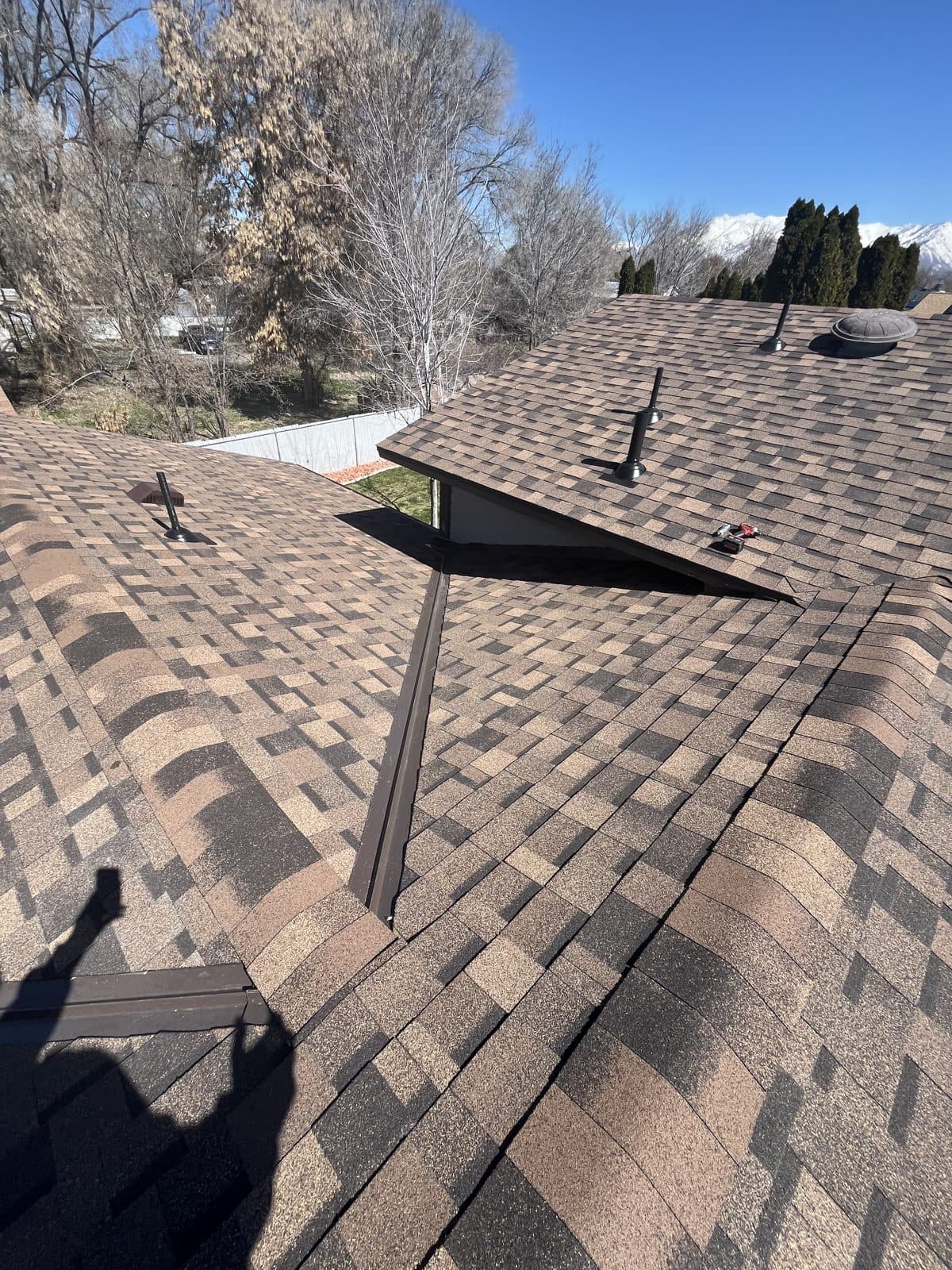
Finished shingle roof with a metal valley 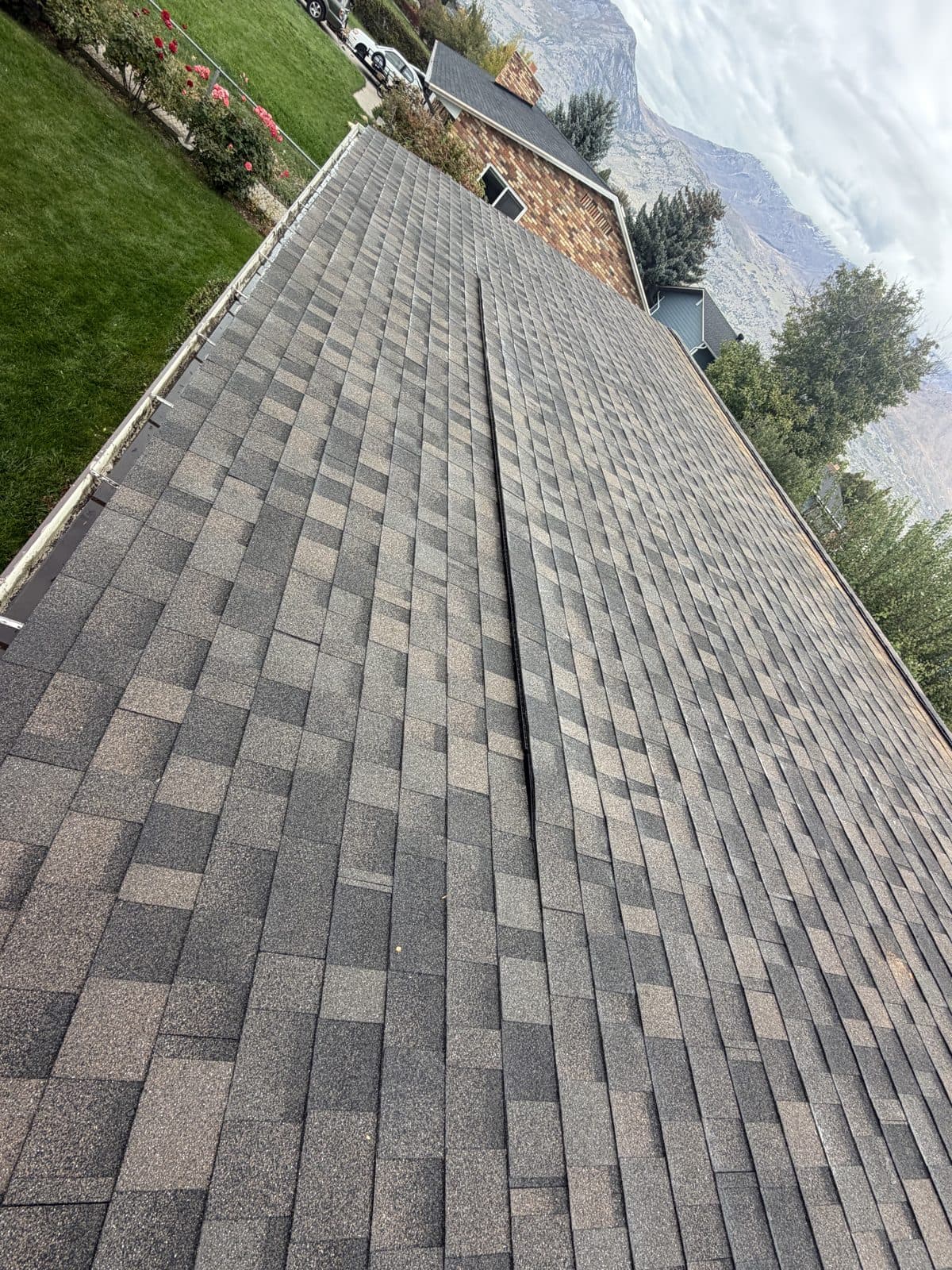
Full roof replacement on the Wasatch Front
A storm claim uses this same visit. How a claim moves.
What we look at
Slopes we can walk safely, plus eaves and details we can see from a ladder when the pitch or the tile says we should stay off. Penetrations, valleys, wall flashings, chimney and skylight curbs, ridge and hip, attic ventilation if the attic is accessible, and the gutter line if gutters are part of the complaint.
We note soft deck only where it shows — from the attic, from a spongy step, or once a tear-off starts. An inspection does not x-ray the plywood.
- Roof type, approximate age if it can be supported, and what we cannot date
- Active leaks versus old stains
- Flashings and penetrations, called out one by one
- Ventilation observations, not a blower-door test
- A recommendation: maintain, repair, or plan a replacement
- Photos that match the sentences
The report you take home
You leave with a photo report organized slope by slope, not a single picture from the street. Where it helps, we mark test squares: a measured patch of shingles checked for bruises and fractures, the same kind of chalk marks you can see in the hail photo on this page. Finished roofs in that gallery are there so a recommendation has something to point at.
The report includes an estimated roof age and condition when the product and the wear support it, and a plain statement when they do not. We also note collateral damage we can see from the roof and the ground: gutters, downspouts, screens, siding, window cladding, air-conditioning units, paint chips, fences, garage doors, and mailboxes. Those notes are observations. They are not a full exterior appraisal.
Recommendations are good, better, and best when there is a real choice of material or detail. Repair stays a repair when that is the honest fix. Replacement is named when the field is done. We do not invent a third price for the same scope.
Buyers and sellers
On a sale, the useful inspection is specific. “Roof is older” does not help a negotiation. “Pipe boots are cracked, the south slope has granule loss to the mat, the north slope is fine” does. We will not invent a crisis to restart a price talk, and we will not wave off a failing valley because the seller wants a clean form.
If you already have a general home inspection that flagged the roof, send it. We are the second look on that trade, not a replacement for the inspector’s whole report.
After hail, and once a year
Post-storm inspections are about functional damage, documented in a way you can hand to an insurer if you decide to call them. Annual looks are quieter: boots, sealant that has given up, gutters full of maple and cottonwood, a lifted edge on the windward slope. On the east benches and in Woodland Hills, debris and shade matter as much as the shingle brand.
What it costs
The inspection that comes with a written estimate for work we might do is free. A stand-alone written condition report — for a sale, or for a roof you do not intend to hire us to touch — is scheduled as its own visit so the expectation is clear. Ask which one you are booking.
Cities where this comes up
These are examples, not a coverage limit. Every city page links the services that matter there.
Roof inspections questions
Is a free estimate the same as a paid inspection?
No. The free visit is so we can price work. A stand-alone report for a buyer or a seller, with no plan to hire the repair, is a different appointment. We would rather label them than pretend they are the same hour.
What is in the inspection report?
Photos by slope, test squares where they help, an age and condition when the evidence supports them, collateral damage we can see, and a good, better, and best recommendation when there is a real choice. The visit that comes with work we might do is free.
Will you walk a steep or tile roof?
When it is safe and the roof can tolerate it. Tile cracks under careless feet. Steep slopes and wet cedar are ladder and drone or binocular work, and the report says what we could not stand on. A guess from the curb is labeled as a guess.
Can you inspect in the winter?
Yes, with limits. Snow hides the field. We can still find ice-dam evidence, attic issues, and some flashing problems, and we will tell you what has to wait until the roof is clear. We do not scrape a frozen slope to finish a form.
Do you inspect commercial roofs?
Low-slope commercial and multifamily roofs, yes, when we can reach them safely. The notes focus on membrane, edges, drains, and ponding. We are not a pavement or facade inspector.
Will an inspection include interior mold testing?
No. If the attic shows staining or damp insulation, we say that and point you to the trades who test air and remediate. Our scope stays on how water is getting in.
Related work
- Roof repairLeaks, flashing, pipe boots, and storm-lifted shingles — repaired when a repair will last, and declined when it will not.
- Storm, hail, and insurance claimsHail and wind documentation for Utah storms, including a meeting with the adjuster — without a promise that a claim will be paid.
- Full roof replacementTear off the old roof, inspect the deck, and install a system specified for that city’s snow, wind, and sun.
- Gutters and roof drainageSeamless gutters, downspouts, and the edge details that keep roof water from becoming a basement or a fascia problem.
Ask about roof inspections.
The inspection is free when it is tied to work we might do. The written scope comes after we have seen the roof.
Emergency roof calls answered 24/7. (385) 333-9637.