Utah
New roof installation
A new roof is not a replacement with the tear-off skipped. The deck is new, the timing depends on the framer, and the mistakes are different: wet sheathing, skipped ice-and-water under a valley the carpenter already covered, and a builder-grade shingle the owner will wish they had upgraded before the scaffold left.
Deck, underlayment, and shingles
Open deck, synthetic underlayment, ice-and-water at the eave, and shingles being nailed. Several of these frames are replacements, because that is when the layers are visible. A new roof gets the same stack.
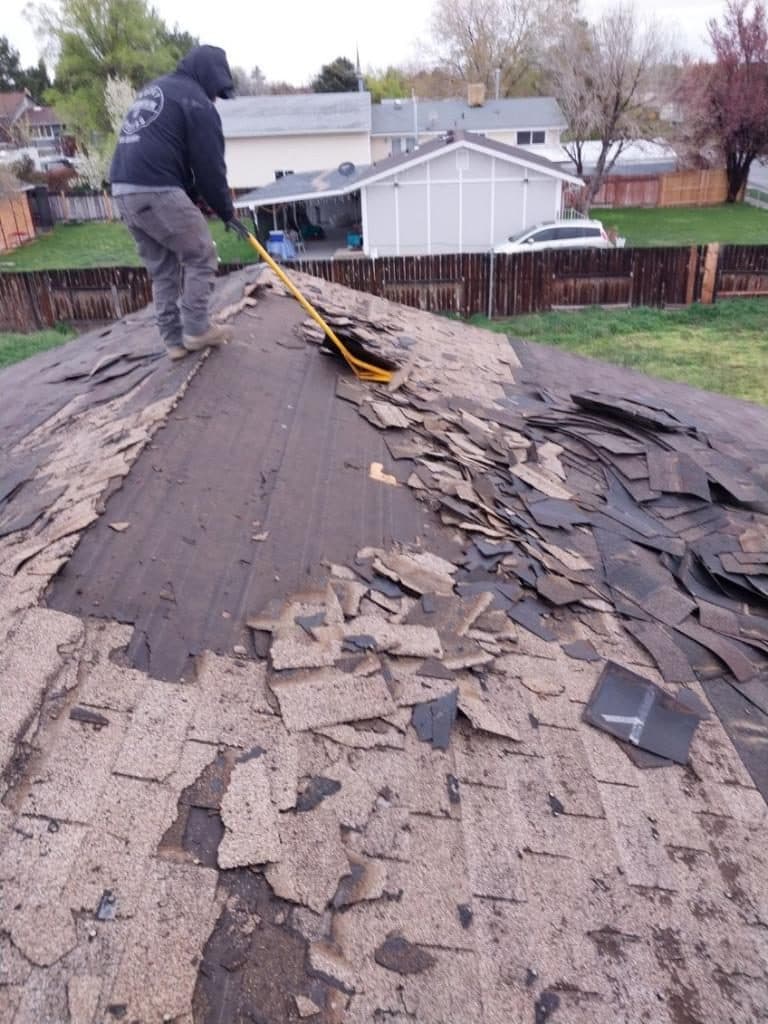
Stripping the old shingles 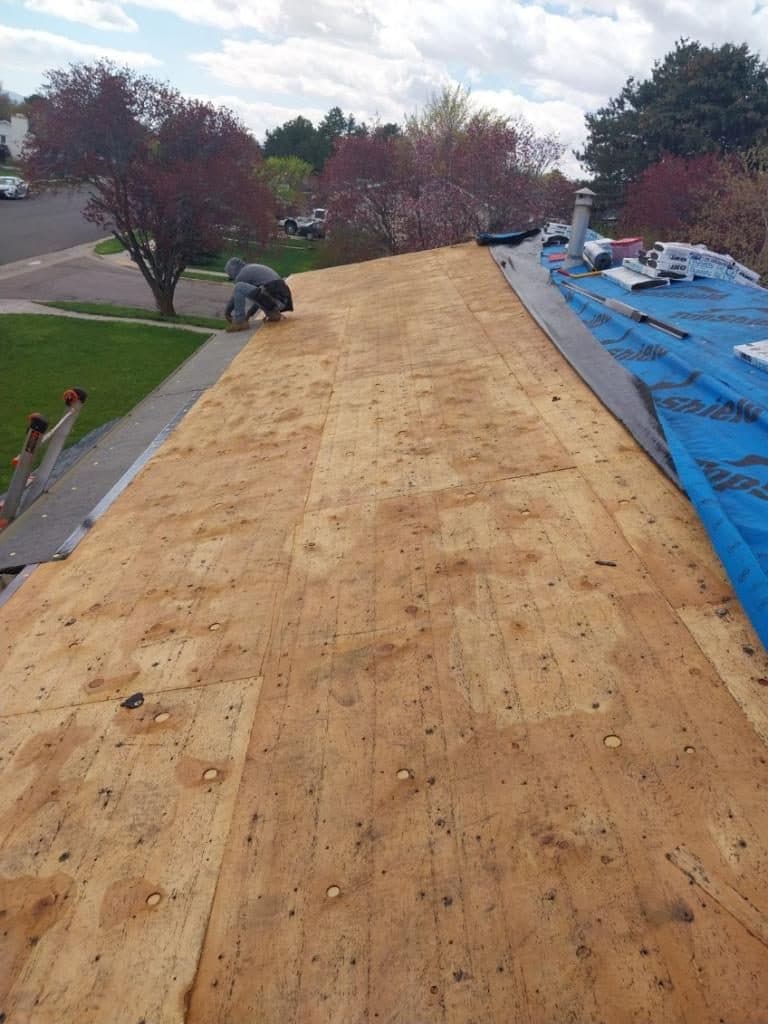
New plywood decking, spring trees 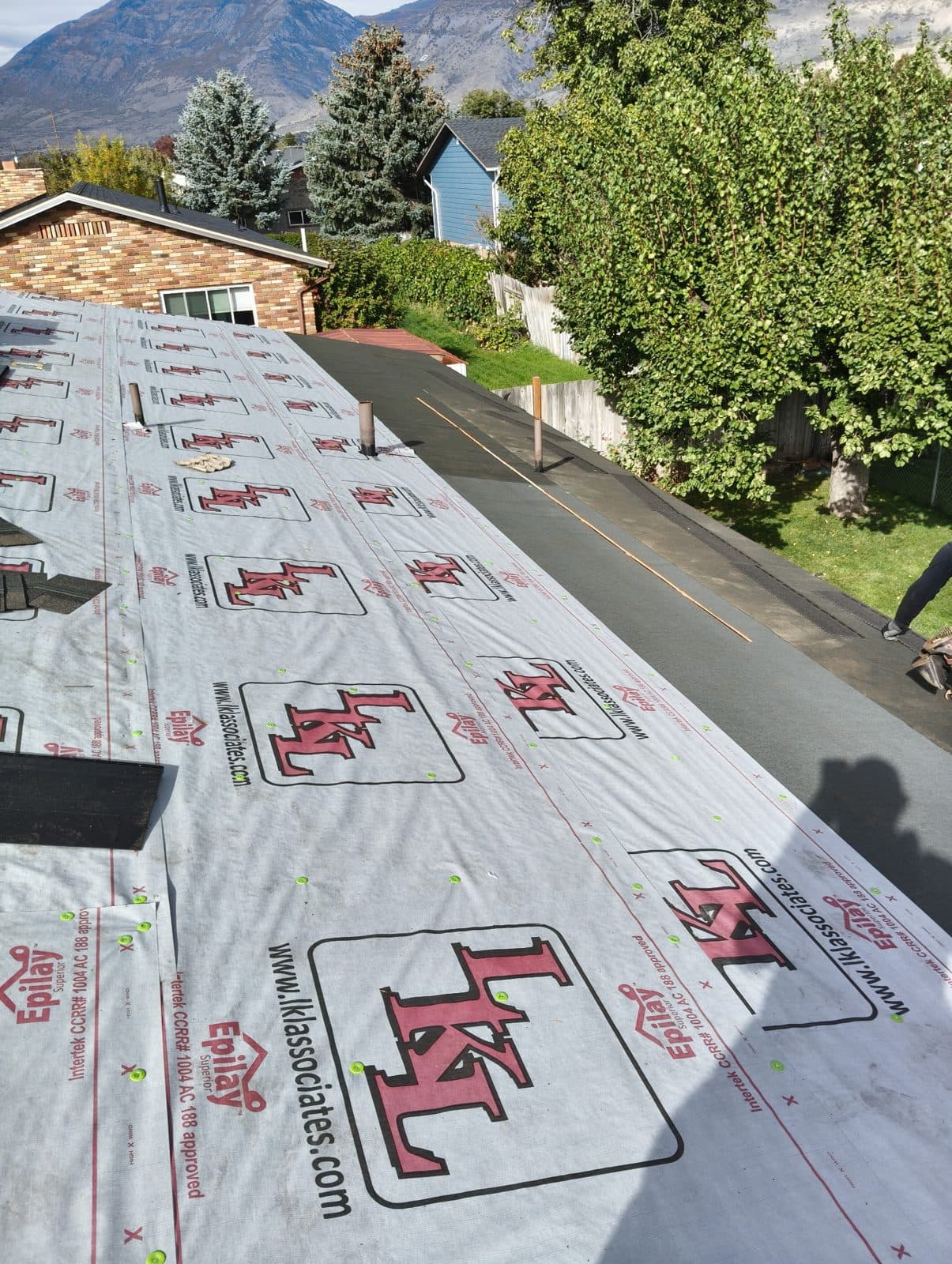
Synthetic underlayment across the field 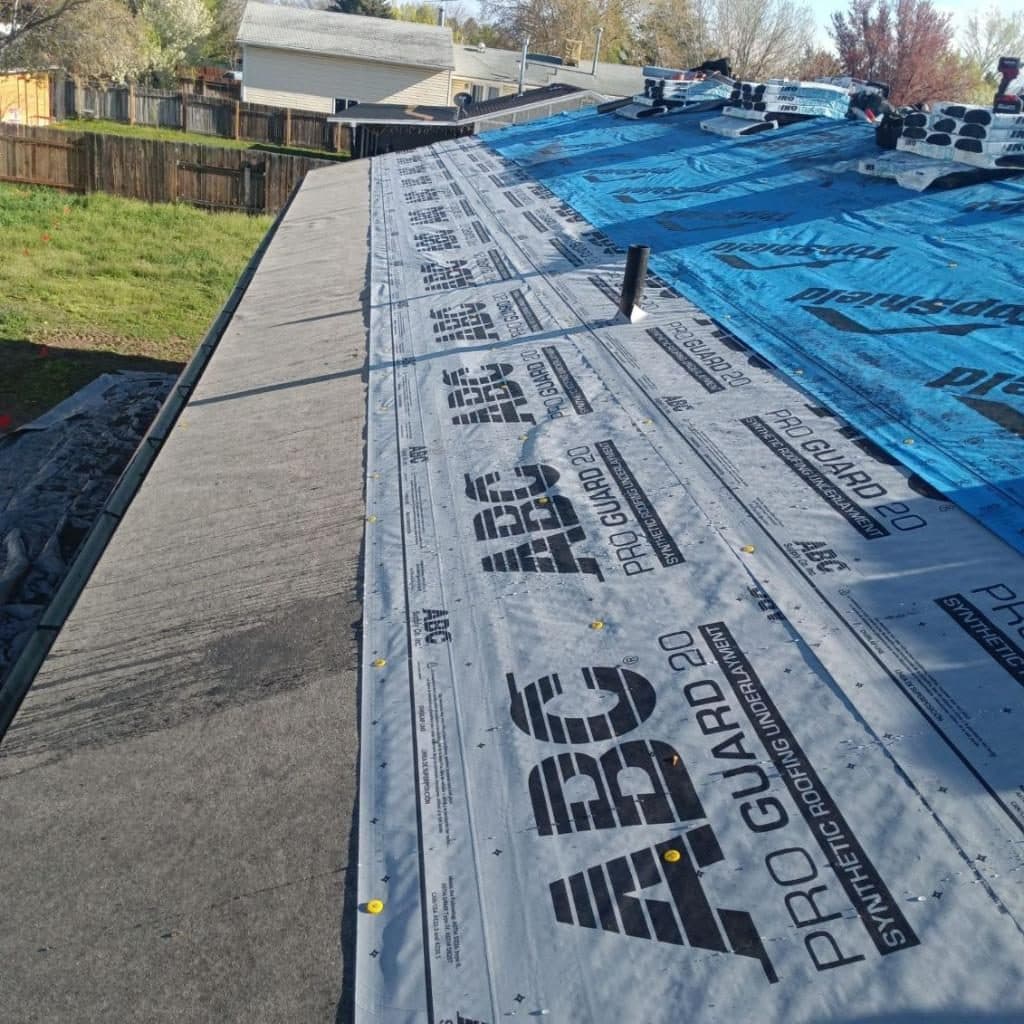
Underlayment above ice-and-water at the edge 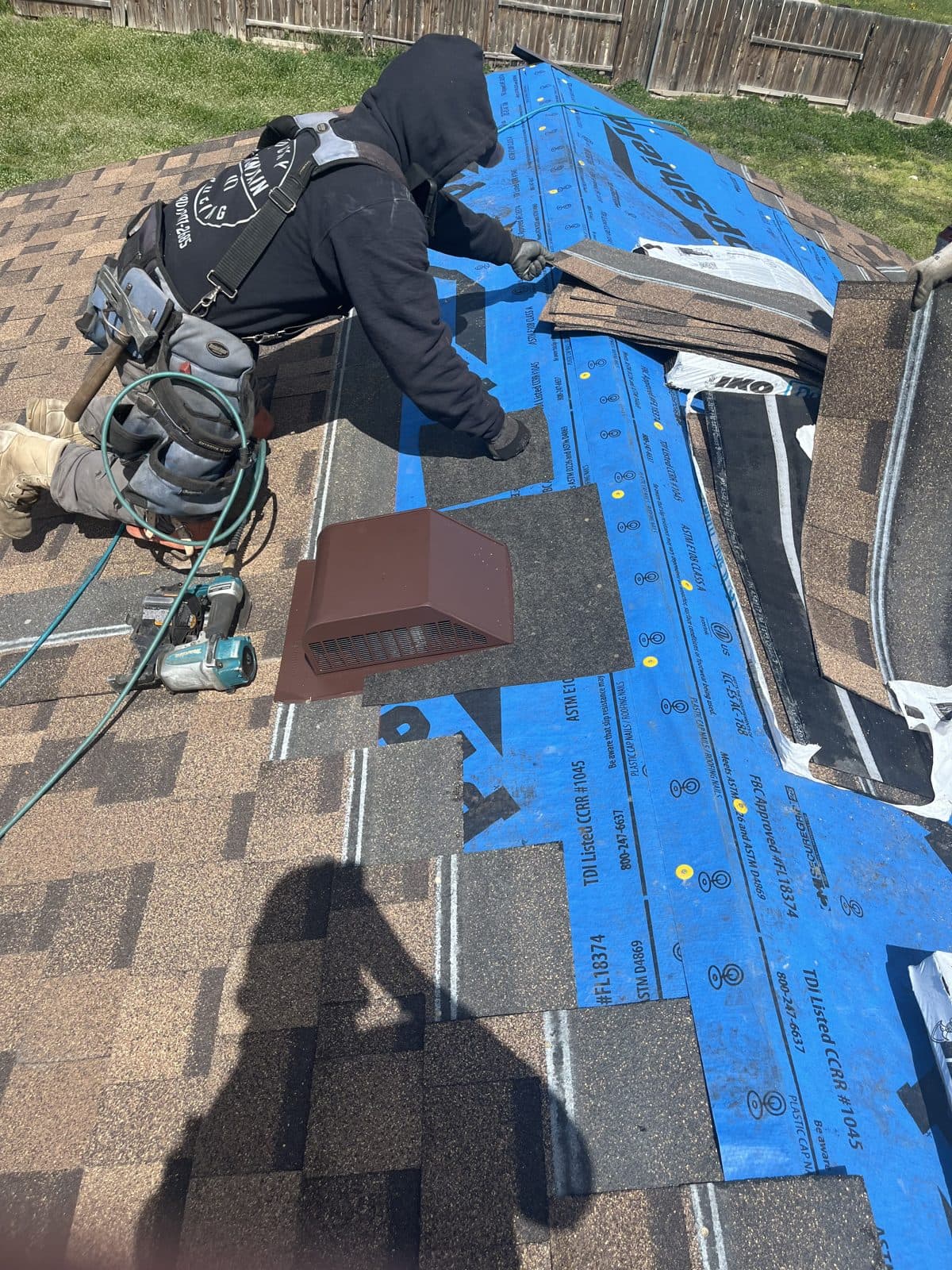
Setting shingles around a plumbing vent 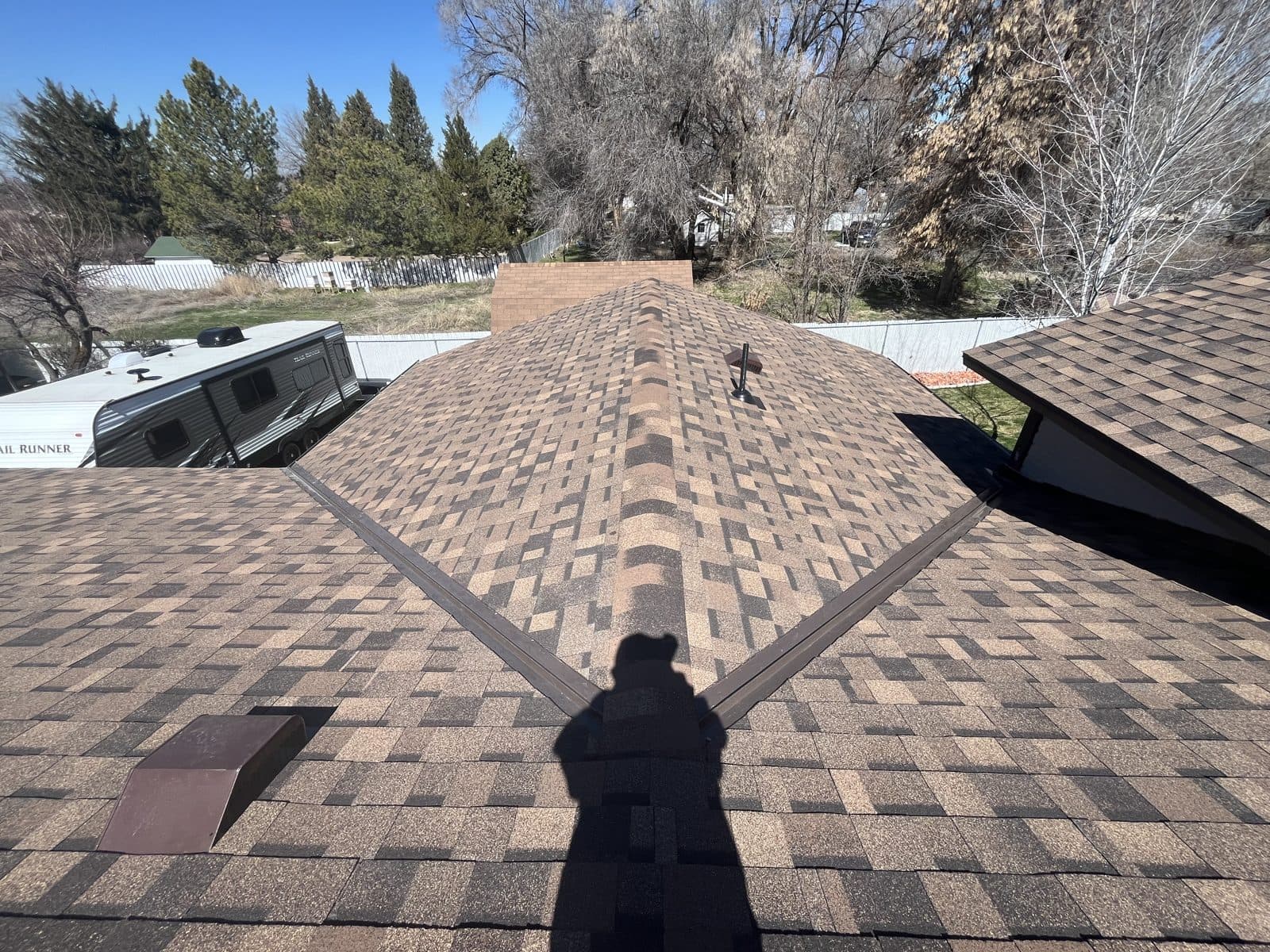
Finished shingle roof with a metal valley, from above
Where this shows up
New houses in Eagle Mountain, Saratoga Springs, Lehi, West Haven, Syracuse, Nibley, and the Washington Fields are an obvious part of the work. So are additions in older Provo, Ogden, and Salt Lake neighborhoods, ADUs, and detached garages that were framed without a clear plan for how the new valley hits the existing roof.
If you are the owner-builder, the roof still has to satisfy the same city inspection as a production house. If you are buying from a builder, this page is also about knowing which upgrades are worth doing before the shingles are on, because redoing them later is a replacement.
Sequencing with the rest of the build
Sheathing should be dry, gapped the way the panel stamp requires, and nailed on a pattern the roof can use. We do not want to shingle over a deck that was rained on for a week and closed up. Felt or synthetic underlayment is a drying-in step, not the finished roof, and it should not sit all winter as if it were one.
Penetrations need a plan. Plumbing vents, bath fans, a range hood, and a future solar layout are cheaper to flash while the roof is open. A swamp cooler dropped on a new shingle roof with a curb someone built on site is a leak we would rather design out.
- Coordination with the framer on valley and cricket framing
- Underlayment and ice-and-water before the finished roof, matched to elevation and shade
- Edge metal that the gutter installer can actually hang on
- A shingle, metal, or tile choice made before color-sensitive siding goes up
- City inspection scheduling that matches that building department
Upgrades owners regret skipping
The production default on much of the Wasatch Front is an architectural shingle. That is a sound roof when it is detailed. The regrets we hear later are about ventilation that was never calculated, a valley that dumps behind a chimney, and no thought for snow sliding onto a doorway. In St. George the parallel regret is a light-color conversation that never happened, or tile installed on a deck and underlayment that were detailed like shingles.
Metal on a new home costs more on day one and changes snow behavior. If you want it, decide before the gutters and the porch are designed. Standing seam will throw snow. The entry and the neighbor’s walk need a place for it.
Additions against an old roof
Tying a new gable into a 1990s roof is a flashing job first and a shingle job second. The old field may not be worth replacing, but the tie-in might force a larger area so the water has a path. We will draw that limit on the estimate instead of shingling “a bit extra” without saying why.
Cities where this comes up
These are examples, not a coverage limit. Every city page links the services that matter there.
New roof installation questions
Can you roof a house the builder already dried in?
Often, if the underlayment is still doing its job and the deck has not sat wet. We look before we agree. A synthetic that has been UV-burned all summer is not a base we want under a 30-year shingle.
Do you work directly for homeowners, or only for builders?
Both. Homeowners call us for additions, garages, and custom homes. Builders call when they want a roof scope that is separate from the rest of the bid. The estimate says who our contract is with.
Should I upgrade from the builder’s shingle?
Sometimes. Impact-resistant shingles, a better ventilation package, or metal are worth it on open west lots and on steep north slopes. They are not automatically worth it on a simple hip with a short run. We will tell you which one you are.
When should solar be planned?
Before the roof is finished, if you know panels are coming. Layout, attachment, and future penetrations are part of the roof scope. Adding that conversation after the ridge vent and the gutters are in costs more and leaks more often.
Are new roofs inspected?
When the city requires it, yes. We schedule around that inspection. Do not let a roofer talk you into skipping a required final because the house “looks done.”
Related work
- Full roof replacementTear off the old roof, inspect the deck, and install a system specified for that city’s snow, wind, and sun.
- Asphalt shingle roofingArchitectural shingles — the default Wasatch roof — detailed for UV at elevation, ice at the eaves, and local wind.
- Metal roofingStanding seam and other metal systems for wind, snow shedding, and owners who want a roof they can reread in twenty years.
- Solar installationRoof-first solar: the roof is made ready, penetrations are planned, and panels are not set on a system that is about to be torn off.
Ask about new roof installation.
The inspection is free when it is tied to work we might do. The written scope comes after we have seen the roof.
Emergency roof calls answered 24/7. (385) 333-9637.